
A drone’s flight altitude directly determines its battlefield survivability, reconnaissance efficiency, and deterrence capability. The higher a drone’s flight altitude, the less radar cross-section it can effectively reduce. Flying altitudes can even exceed the firing altitude of air defense missiles, evading interception and effectively improving its penetration capability and survivability. Furthermore, the higher the drone’s flight altitude, the wider its reconnaissance area and strike coverage, effectively enhancing its reconnaissance efficiency and deterrence capability.
Here are the top 10 high-end drones in active service with the highest flight altitudes in the world based on public data:
No. 1: Wuzhen-8 (WZ-8), China, 40,000+ meters
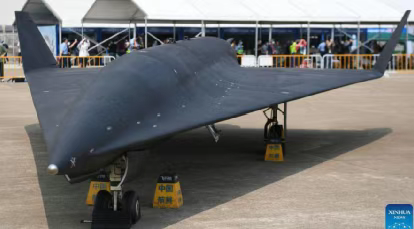
The Wuzhen-8 is a near-space high-speed uncrewed reconnaissance aircraft developed by China’s Aviation Industry Corporation of China. It is the world’s only operational drone capable of sustained near-space reconnaissance. It made its public debut at the 2019 National Day 70th Anniversary Parade. The Wuzhen-8 utilizes a tailless delta-wing configuration and twin YF-50 liquid rocket engines, eliminating the need for atmospheric oxygen to provide core thrust for ultra-high altitude flight. Vertical tails are located at either end of the delta-wing. Launched from a carrier aircraft, the Wuzhen-8 can achieve near-space flight at an altitude of 40 kilometers. With a length of 11.5 meters, a wingspan of 6.7 meters, and a takeoff weight of approximately 5 tons, it has an estimated maximum range of over 2,000 kilometers and a flight time of roughly one to two hours. It is capable of effectively penetrating heavily defended strategic and operational targets. Its equipped reconnaissance equipment provides high-resolution target imagery, providing reconnaissance and strike effectiveness assessment intelligence to combat units at all levels. The Wuzhen-8, with its flight altitude exceeding 40,000 meters, combined with hypersonic speeds exceeding Mach 6 and stealth, has established itself as a world-leading strategic reconnaissance platform.
No 2: Wuzhen-9 (WZ-9) China 25,000 meters
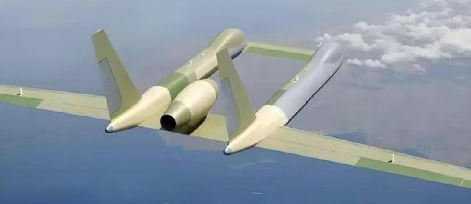
The Wuzhen-9, a high-altitude, long-endurance strategic uncrewed aerial vehicle (UAV) developed by China’s Aviation Industry Corporation (AVIC), is codenamed “Shen Diao.” It is the world’s first dedicated anti-stealth unmanned early warning and control aircraft (AWACS). The prototype made its maiden flight in 2015, with the first public release of a test flight video in December 2024. It is scheduled for deployment in March 2025, and an upgraded version underwent test flights in July 2025. The Wuzhen-9 is the world’s largest UAV, featuring a twin-body wing structure with a wingspan of 50 meters and a length of 25 meters. It is powered by a new WS-19 turbofan engine with a single thrust of 9.5 tons. It has a takeoff weight of approximately 20 tons, a maximum altitude of 25,000 meters, a cruising speed of 979 km/h, a range of 20,000 kilometers, and an endurance of over 35 hours. The Wuzhen-9 addresses the shortcomings of traditional AWACS aircraft in maintaining high-altitude, persistent surveillance capabilities. Its primary competitor is the US RQ-4 Global Hawk.
No. 3: WZ-7 (China) 22,000+ meters
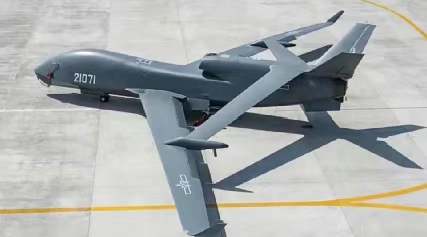
The Wuzhen-7 is a high-altitude, long-endurance strategic uncrewed reconnaissance aircraft designed by the Aviation Industry Corporation of China (AVIC). Codenamed “Xianglong,” it was officially commissioned in 2018 and unveiled for the first time at the 2021 Zhuhai Air Show. The WP-13 engine powered early models, while upgraded versions were fitted with the non-afterburning WS-13 WS-13. It is the world’s only UAV to feature a diamond-shaped wing configuration, with the main wing and rear wing connected in a diamond-shaped structure. The vertical tail is a V-shaped twin fin, enhancing high-altitude stability and maneuverability. It combines a high lift-to-drag ratio with a lightweight structure. With a length of 14.33 meters and a wingspan of 24.86 meters, it has a takeoff weight of 7.5 tons and a payload of 650 kg. It has a service ceiling exceeding 22,000 meters and a cruising speed of 750 km/h. Its estimated range exceeds 12,000 kilometers, and its endurance exceeds 15 hours. It serves as the information hub of the area denial system, and its core competitor is the US RQ-4 Global Hawk.
No 4: RQ-4 (Global Hawk) United States 20,000 meters
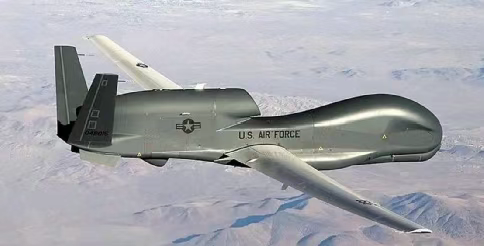
The RQ-4 Global Hawk is a high-altitude, long-endurance strategic uncrewed reconnaissance aircraft developed by Northrop Grumman in the United States. It entered service with the US military in 2001 and is the largest unmanned reconnaissance platform in active service. It serves as the US military’s primary strategic reconnaissance platform, capable of conducting sustained intercontinental reconnaissance. The RQ-4 series includes several versions, including the RQ-4A, RQ-4B, MQ-4C, Euro Hawk, Korean-specific, and Japanese-specific versions, with the RQ-4B being the primary. The RQ-4B features a huge wingspan and upright V-tail, with a wingspan of 39.9 meters and a length of 14.5 meters. It features an Orca-style bulbous nose and is powered by a Rolls-Royce AE 3007H turbofan engine with a thrust of 31.4 kilonewtons. It has a maximum takeoff weight of 14.6 tons and can carry a payload of 900 kg. It has a service ceiling of 20,000 meters, a cruising speed of 635 km/h, a range of over 22,000 kilometers, and an endurance of up to 32 hours, making it the world’s longest-endurance uncrewed aerial vehicle. The United States plans to gradually retire the RQ-4 drone by 2027 and replace it with the RQ-180 drone currently under testing.
No. 5: WZ-10, China, 18,000+ meters
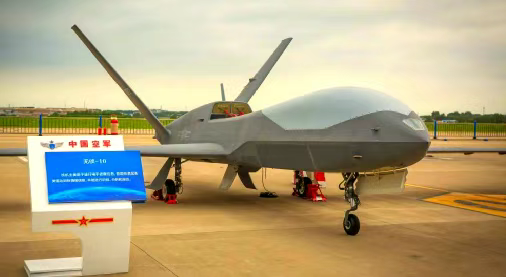
The WZ-10, codenamed “Wind Shadow,” is a high-end reconnaissance and strike electronic warfare drone designed by China’s Aviation Industry Corporation of China. A derivative of the Wing Loong-10, it is capable of high-altitude, long-endurance strategic reconnaissance and is the world’s first professional large-scale electronic warfare drone. It debuted publicly at the 2022 Zhuhai Air Show and officially entered service in 2024. The WZ-10 features diamond-shaped serrated edges, a concealed dorsal air intake, and V-shaped twin vertical tails. It is 9.95 meters long and has a wingspan of 17.8 meters. Powered by two ZF850 turbofan engines with a total thrust of 31.4 kilonewtons, it has a maximum takeoff weight of 3.5 tons, a service ceiling exceeding 18,000 meters, a cruising speed of 650 km/h, a maximum payload of 900 kg, and six underwing hardpoints. It has a maximum range of 4,000 kilometers and an endurance of over eight hours. Its primary competitors are the US MQ-9 Reaper drone and EA-18G manned aircraft.
No. 6: RQ-180 (White Bat) United States 18000+ meters
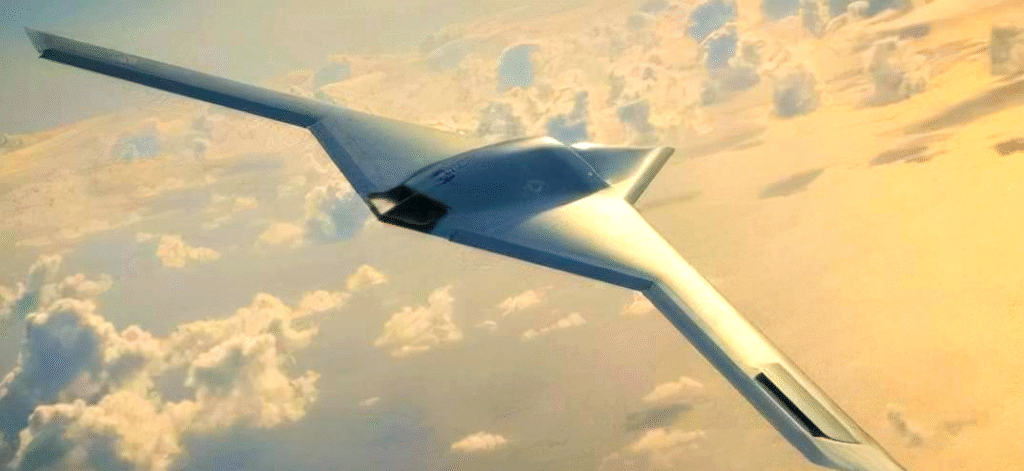
The RQ-180 is a high-altitude, long-endurance, stealth uncrewed reconnaissance aircraft developed by Northrop Grumman in the United States. It first flew in 2010 and officially entered service in 2019. The RQ-180 features a similar blended-wing-body design, with a wingspan of approximately 40 meters and a length of approximately 14.5 meters. It is equipped with two GE CF-34 turbofan engines, boasting twice the thrust of the RQ-4, significantly improving its climb rate and maneuverability. It has a maximum takeoff weight of 14.6 tons. It can carry a payload of approximately 1 ton, primarily consisting of reconnaissance equipment such as an active phased array radar and electronic warfare equipment such as electromagnetic suppression. It can also serve as a communications relay. It has a maximum flight altitude of 18,000 meters, a cruising speed of 900 km/h, a maximum range of 22,000 kilometers, and an endurance of 24 hours. The RQ-180 will replace the U-2 reconnaissance aircraft and the RQ-4 Global Hawk. It is a high-stealth, high-defense, and unmanned reconnaissance platform for the US military, integrating high-altitude intelligence reconnaissance, electronic warfare, and communications relay capabilities.
No. 7: S-70B (Hunter) Russia 18,000 meters
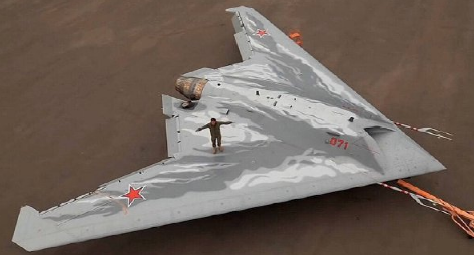
The S-70B UAV is a high-altitude stealth UAV developed by the Russian Sukhoi Design Bureau, which is mainly used for attack and has strategic bombing capabilities. It adopts a flying wing aerodynamic layout. The prototype is the S-70 UAV, equipped with an AL-31F turbofan engine. It completed its maiden flight on August 3, 2019. In 2024, it was replaced with an AL-41F turbofan engine for mass production and upgraded to the S-70B. It has a wingspan of about 20 meters, a length of about 14 meters, a take-off weight of over 20 tons, a maximum payload of up to 2.8 tons, a practical ceiling of 18,000 meters, a maximum flight speed of about 1,000 km/h, and a maximum range of over 6,000 kilometers. The S-70B is Russia’s most powerful heavy stealth UAV.
No. 8: Shahed-147 (Witness-147) Iran 18,000 meters
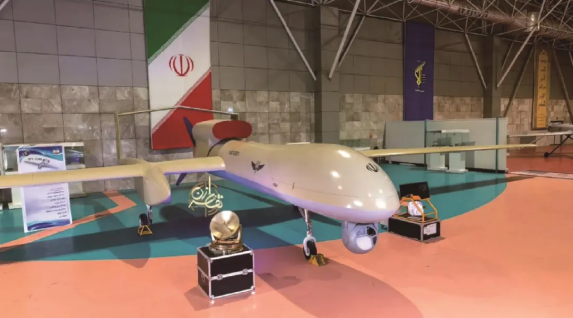
The Shahed-147 is a high-altitude, long-endurance reconnaissance drone developed by Iran’s Shahed Aerospace Industrial Research Center. Leveraging Iran’s captured and reverse-engineered capabilities of the US MQ-9 Reaper, the Shahed-147 and its upgraded Shahed-149 Gaza heavy-duty reconnaissance and strike drone were developed. The Shahed-147 has a wingspan of 26 meters, is powered by a turboprop engine, weighs approximately 5 to 7 tons, has a service ceiling of 18,000 meters, a flight speed of approximately 500 km/h, and a range of over 1,800 kilometers. Its primary payload is a synthetic aperture radar, designed to counter advanced air defense systems in neighboring countries like Israel. It fills a gap in Iran’s high-altitude penetrating reconnaissance capabilities and is a high-end drone designed for low-cost strategic reconnaissance.
No. 9: Rainbow 7 (CH-7) China 16,000 meters
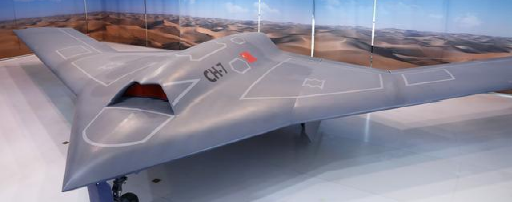
The Rainbow-7 UAV is a high-altitude stealth strategic-class uncrewed reconnaissance aircraft developed by the China Aerospace Science and Technology Corporation. It adopts a flying wing layout with a highly integrated wing and body and a serrated horizontal tail. It uses two turbofan engines with a total thrust of 10 tons, a wingspan of 27.3 meters, a maximum take-off weight of 8 tons, a practical ceiling of approximately 16,000 meters, a cruising speed of 610 km/h, a flight time of 16 hours, and a range of up to 10,000 kilometers. It can perform continuous covert reconnaissance and intelligence acquisition missions in a highly confrontational environment, and provide target guidance for long-range strike weapons. Its core competitors are the US RQ-180 “White Bat” UAV and B-21 bomber.
No. 10: MQ-9 (Reaper) United States 15,000+ meters
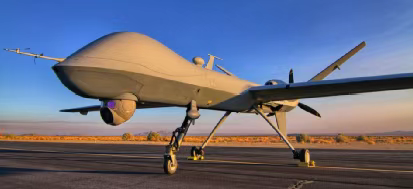
The MQ-9 Reaper series of uncrewed aerial vehicles (UAVs), developed by General Atomics Aeronautical Systems, is the world’s most widely deployed, combat-proven, and exported high-end reconnaissance and strike UAV. The product line includes the MQ-9A Reaper, MQ-9A Extended Range (ER), MQ-9B Skyguard, MQ-9B Sea Guardian, and MQ-9B Short Takeoff and Landing (STOL) variants, exemplifying modular design. The MQ-9A features a high-aspect-ratio straight-wing design, an 11-meter length, a 20-meter wingspan, and a maximum takeoff weight of 4.7 tons, offering a high lift-to-drag ratio. It is equipped with a Honeywell TPE331-10T turboprop engine with a three-blade constant-speed propeller, generating a maximum output of 671 kW. It incorporates fuel-alcohol injection technology to enhance high-altitude performance. The MQ-9A boasts a maximum speed of 445 km/h, a service ceiling of 15,240 meters, a range of 4,820 kilometers, and an endurance of over 27 hours. It plays a central role in the combat systems of the United States and its allies.

