
The U.S. Army deployed D-Fend Solutions’ EnforceAir2 cUAS at Combined Resolve 25-02, showcasing RF-cyber technology that detects, controls, and neutralizes hostile drones without jamming or kinetic force
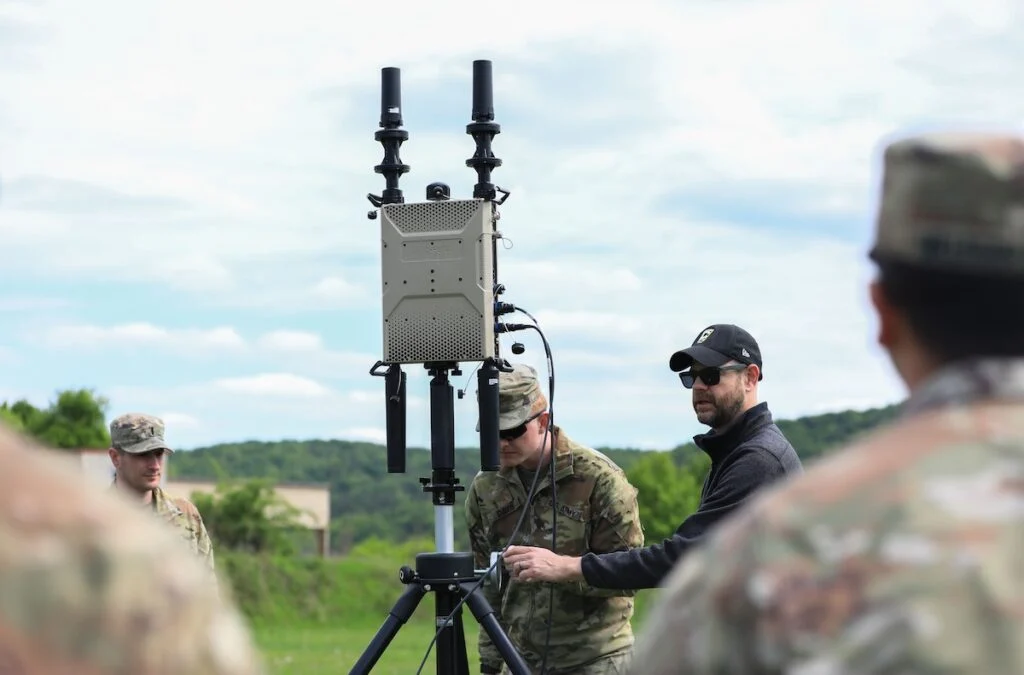
D-Fend Solutions’ EnforceAir2 counter-unmanned aerial system (cUAS) was deployed by the U.S. Army’s 3rd Infantry Division during multinational exercise Combined Resolve 25-02 at Hohenfels, Germany.
The system was operated by Soldiers from the 1st Armor Brigade Combat Team as part of the Army’s Transforming in Contact (TIC) initiative, which evaluates electronic warfare and counter-UAS technologies within modern force structures and tactics.
RF-Cyber Counter-Drone Capability
A U.S. Army Skydio X10D drone assigned to 3rd Infantry Division lowers to the ground after being taken over and grounded by the EnforceAir 2 cUAS Software-Defined Radio (SDR) Drone Detector during Combined Resolve 25-02. Image credit: U.S. Army photo by Spc. Hunter Carpenter
EnforceAir2 is a software-defined radio (SDR)-based CUAS that detects, identifies, and takes control of hostile drones. Instead of using jamming or kinetic engagement, the system employs RF-cyber takeover technology to:
- Return drones to their point of origin
- Redirect flight paths
- Land unauthorized UAS safely
This ensures threat mitigation without collateral disruption to GPS, communications, or surrounding systems.
Fielded in Realistic Operational Environments
During the exercise, EnforceAir2 was mounted on a tripod, providing static defense for ground units. By integrating advanced counter-drone technology into Combined Resolve 25-02, the Army demonstrated its ability to counter evolving UAS threats while supporting multinational interoperability.
Key Features of EnforceAir2
- EnforeAir2 RF-cyber drone takeover with no jamming or kinetic effect. Image credit: U.S. Army photo by Spc. Hunter CarpenterRF-cyber drone takeover with no jamming or kinetic effect
- 360° tactical deployment for static and mobile operations
- Backpack kit for covert, man-portable missions
- Vehicular integration for on-the-move protection
- Safe mitigation with no interference to GPS or communications
- Ability to return, redirect, or land hostile drones

