
Summary
Unmanned Surface Vessels (USVs) are revolutionizing sea warfare, shifting from explosive drones to versatile roles, as shown by a recent rescue off Oman. Their modular design allows rapid adaptation, deploying diverse payloads like torpedoes, air drones, and rockets. The US Navy now integrates USVs into live-fire sinking exercises. These smaller autonomous vessels function as mobile submarine pens and small aircraft carriers, performing electronic warfare and launching various unmanned systems. This swift evolution increasingly renders larger surface ships less relevant. Military forces must adapt strategies to fully leverage this transformative technology.
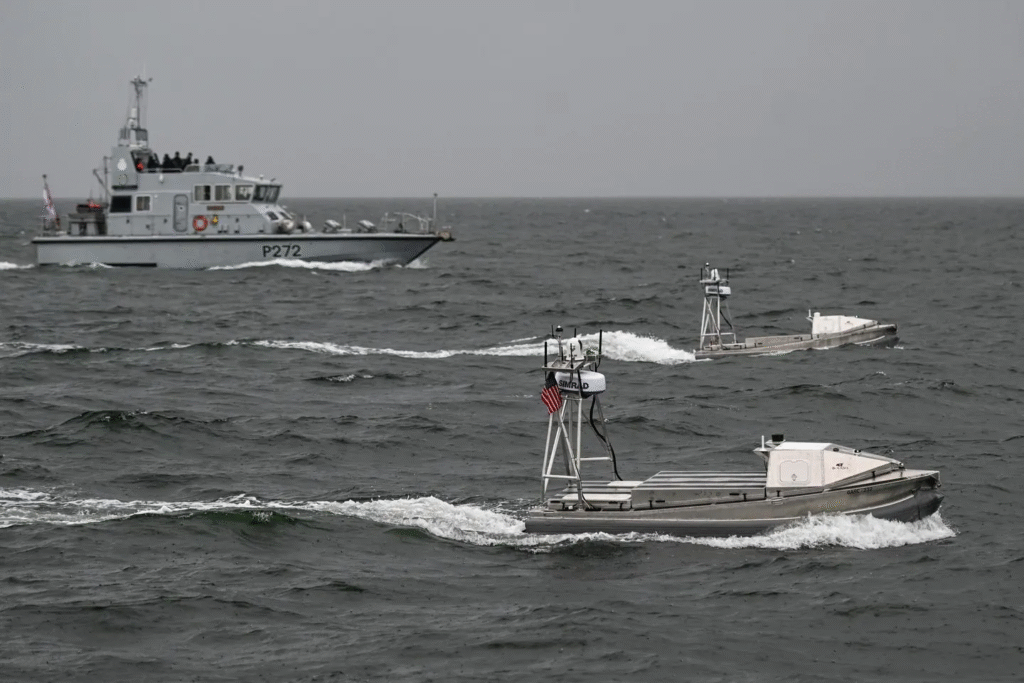
Getty Images
The rescue of downed American crew members of an Apache AH-64 attack helicopter last month off the coast of Oman by a Saronic Corsair unmanned surface vessel captured the world’s attention as a premiere example of human-machine teaming in a combat situation.
Uncrewed vessels, commonly known as drone boats, have long been a staple of Ukrainian tactics against Russian ships in the Black Sea and famously used with explosives. The drone boat rescue in the Middle East represented a change in sea drone tactics, raising discussions about how USVs can remove service members from harm’s way.
Yet drone boats have revolutionized sea warfare to such an extent that using them for surveillance, rescue missions and even as self-propelled sea bombs sells their potential short. Drone boats lend themselves to a wide array of tactics. They exist now in so many varied forms that they have already overtaken many of the traditional functions of larger surface warfare ships.

