
While global attention has focused on the expanding war in the Middle East, tensions between Pakistan and Afghanistan have simultaneously escalated into armed conflict. On February 27, 2026, Pakistan’s defense minister declared “open war” on Afghanistan as the Pakistani military carried out air and artillery strikes on Kabul, Kandahar, and Paktia. The two sides had already endured months of tension, including Pakistani air strikes on Kabul in October 2025. The conflict stems from cross-border fighting along the disputed Durand Line, with each side accusing the other of initiating hostilities. The Taliban responded to the latest strikes with a series of drone attacks against military targets in Pakistan. As tensions persist, Afghanistan is expected to continue this tactic of employing drones to respond to Pakistani military actions.
Afghanistan’s Current Usage Of Drones
Islamabad and Kabul have released conflicting accounts regarding the scope and effectiveness of Afghanistan’s recent drone strikes. Afghan authorities claimed their attacks reached major Pakistani military targets, including sites near Islamabad, and inflicted significant damage and casualties. Pakistan rejected those assertions, stating that only a small number of drones were launched, primarily in border regions. Pakistani officials further maintained that their counter-drone systems intercepted the aircraft before they caused serious damage or fatalities.
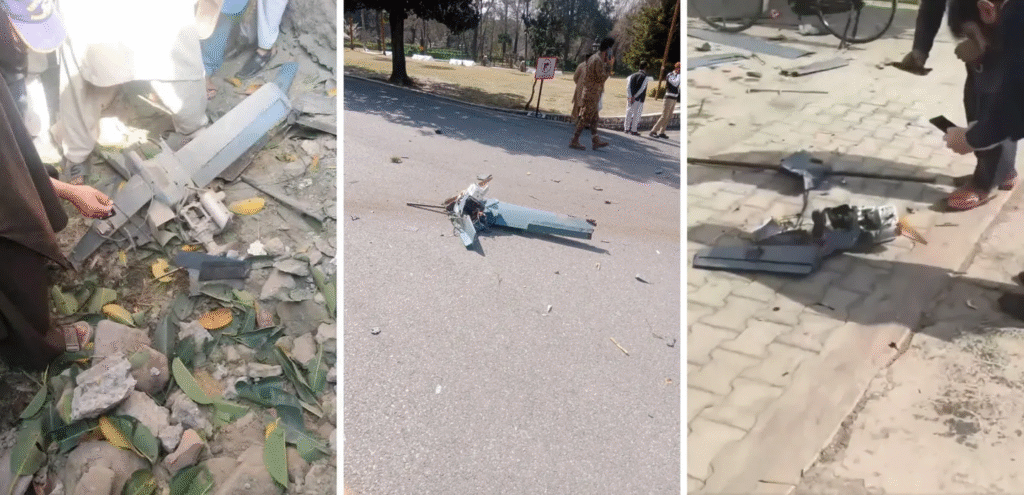
Unlike the earlier Pakistani strikes on Afghan targets, no footage has been released to substantiate either side’s statements. However, several social media posts show images claiming to be debris from Afghan drones in Pakistan. These drones appear to have been small fixed-wing systems with a wingspan of approximately 1.5 meters. It is unclear whether the same platform was used in all of the attacks, although images from different locations suggest relatively similar designs. The drones do not appear to be a standard commercial model. Rather, they appear to have been purpose-built systems assembled from commercially available components.
The drones’ relatively simple designs suggest limited range and remote operation. As a result, they would need to be launched within a few kilometers of their intended targets. This indicates that the Afghan military likely coordinated these attacks with groups such as the Tehrik-e-Taliban Pakistan (TTP), a militant group operating along the Afghanistan-Pakistan border. Pakistan refers to the group as Fitna al-Khawarij, and it has historically used Afghan territory to plan attacks against Pakistan. Although this recent strike was the first large-scale, coordinated drone operation publicly ordered by Afghanistan, the TTP has previously launched isolated drone attacks against Pakistani targets.
The Benefits Of Afghanistan’s Usage Of Drones
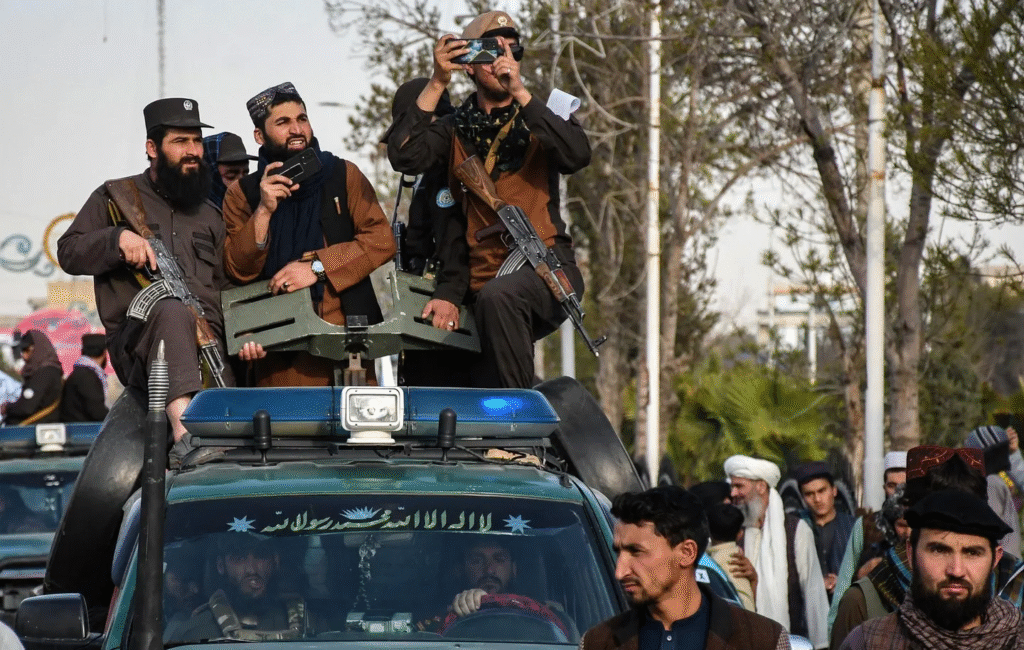
Afghanistan’s strategy of drone strikes offers several advantages. First, small drones effectively function as mobile improvised explosive devices (IEDs). Unlike traditional roadside bombs, they are not fixed in place and do not rely on a target passing a specific point. Drone operators can guide the aircraft to strike selected targets at times and locations that maximize damage. Similar to IEDs, the components needed to build these systems are inexpensive and widely available. With modest technical skill and open-source instructions, such drones can be assembled at relatively low cost.
Second, defending against these systems at scale is difficult and expensive. Counter-drone systems, including radar and electronic warfare tools, are typically reserved for high-value sites. It is not feasible for Pakistan to provide protection to every potential military or civilian target. Defensive systems also tend to lag behind drone technology, which is rapidly advancing by leveraging advances in the commercial sector. Afghanistan and the TTP can modify control signals and flight profiles to evade detection and jamming. In turn, Pakistan must invest additional resources to upgrade its defenses, which may only remain effective until the next iteration of drone improvements.
Third, the use of drones aligns with the geography of the porous Afghanistan-Pakistan border. Longstanding smuggling routes through the mountains allow small groups and materials to cross with limited visibility. The Taliban and TTP know these mountain passes well from their twenty-year conflict with NATO. Small teams can move drone components and munitions into Pakistan, where they can be assembled. They can then position themselves close enough to intended targets to launch the drones, while still maintaining sufficient distance to avoid immediate engagement. This blend of proximity and standoff complicates detection and response.
Afghanistan’s Path Forward With Drones
These drone strikes reflect a natural progression in how Afghan forces have historically fought when overmatched. During the Soviet-Afghan War, the Mujahedeen relied on guerrilla tactics, ambushes, and externally supplied weapons such as Stinger missiles to offset Soviet airpower and armor. Against NATO forces, insurgents turned to IEDs, using inexpensive materials and local networks to impose steady casualties and psychological pressure.
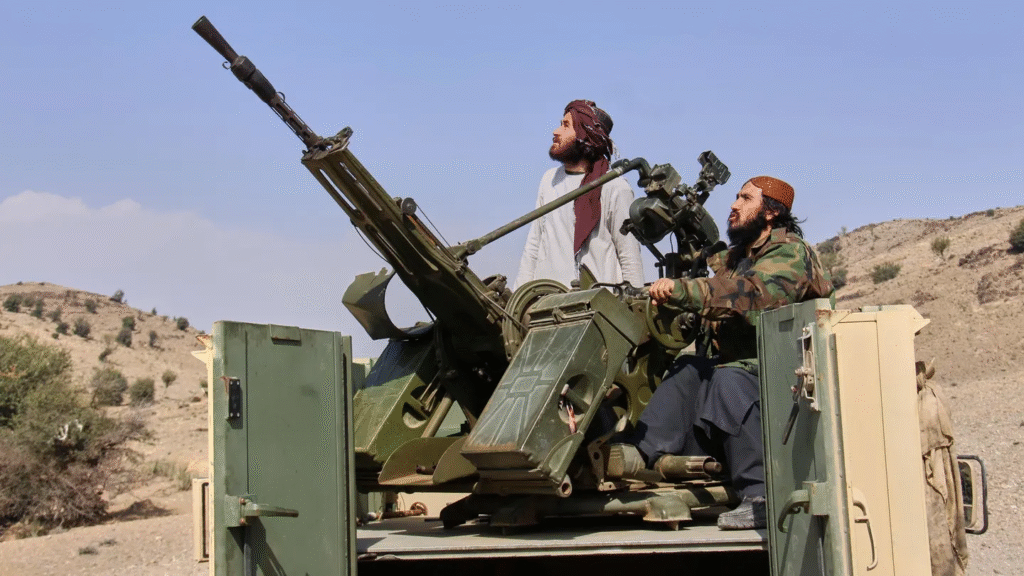
Once again, Afghan forces find themselves overmatched. Pakistan’s military significantly exceeds Afghanistan’s in manpower, funding, and conventional capability. Pakistan fields approximately 660,000 active personnel, supported by modern aircraft, armor, long-range artillery, and integrated air defenses. Afghanistan’s forces are far smaller and lack comparable airpower or sustained logistical support. Much of their heavier equipment consists of weapon platforms and outdated vehicles left behind during the Soviet and NATO withdrawals. Many of these platforms suffer from poor maintenance and are outclassed by Pakistani systems. In recent fighting, Pakistan released video footage of its artillery destroying an Afghan T-62 tank, a platform first introduced in 1961.
Given this disparity, asymmetric tactics are a strategic necessity. Afghanistan cannot compete with Pakistan in a conventional head-to-head fight without incurring severe losses. Drones, proxy networks, and cross-border operations allow Afghan actors to impose costs on Pakistani military targets while avoiding direct engagements that favor Pakistan’s superior firepower. As long as this imbalance persists, drones will remain an attractive tool of pressure.
Even if hostilities cool, the underlying drivers of the conflict will remain. Pakistan has long cited Afghanistan’s support for the TTP as a core grievance. If open war is avoided, Afghanistan can continue its proxy campaign by providing the TTP with drone components and munitions necessary to conduct strikes. Drone attacks against Pakistani targets are therefore likely to continue. As the attacks continue, the drones will grow more sophisticated in order to stay ahead of Pakistani counter-drone defenses. Hence, the Afghan drone threat will not disappear but will adapt, becoming more capable and more difficult for Pakistan to counter.

