
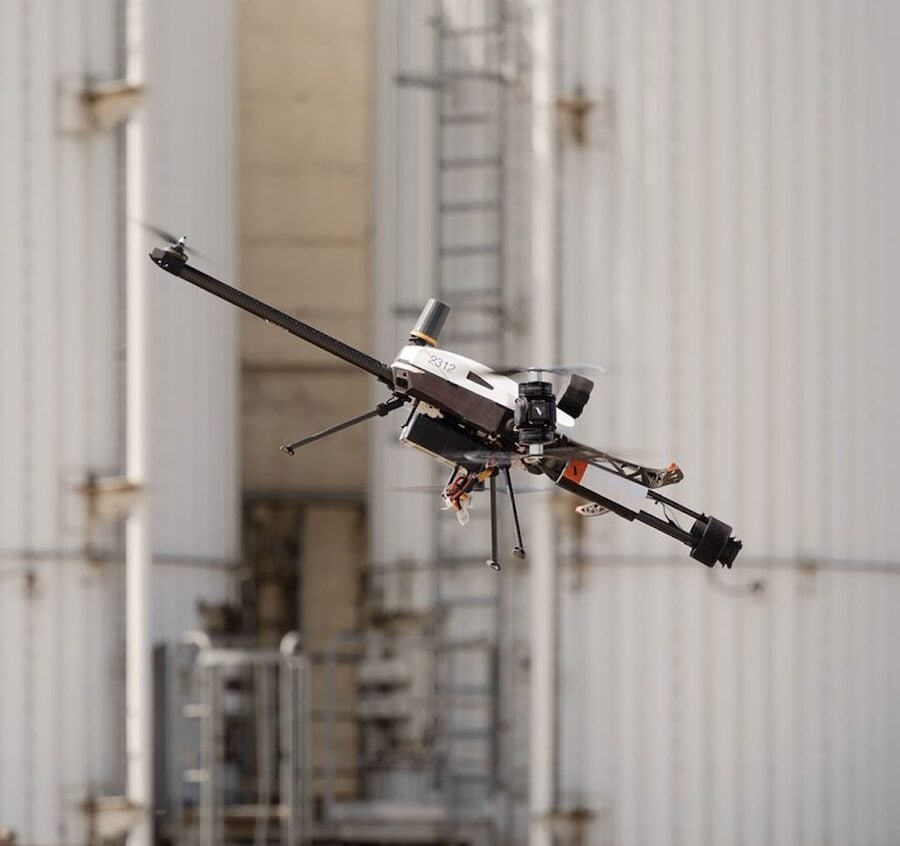

Voliro is the developer of an innovative and industry-disruptive aerial robotic solution that provides a new level of efficiency for non-destructive testing and inspection, enabling operators to work safely at extreme heights and in highly challenging areas.
The result of five years of research, the Voliro solution significantly streamlines workflows for asset owners and UAS (unmanned aerial system) service providers alike, and is currently operational in 17 countries around the world completing over a hundred successful inspections every month.
The Voliro Advantage
 Voliro’s state-of-the-art aerial robotic technology revolutionizes every step of the inspection process, allowing the work to be completed faster and more cost-effectively.
Asset owners benefit from minimizing downtime and the ability to inspect facilities while still in service, while maximizing the utilization of any necessary shutdown. Potential issues can be detected and dealt with before they escalate, keeping costs low and extending the lifetime of the assets.
Drone inspection providers can use the Voliro platform to expand their capabilities and offer their clients industry-leading performance. More thorough inspections can be completed in much less time, boosting your productivity and profitability.
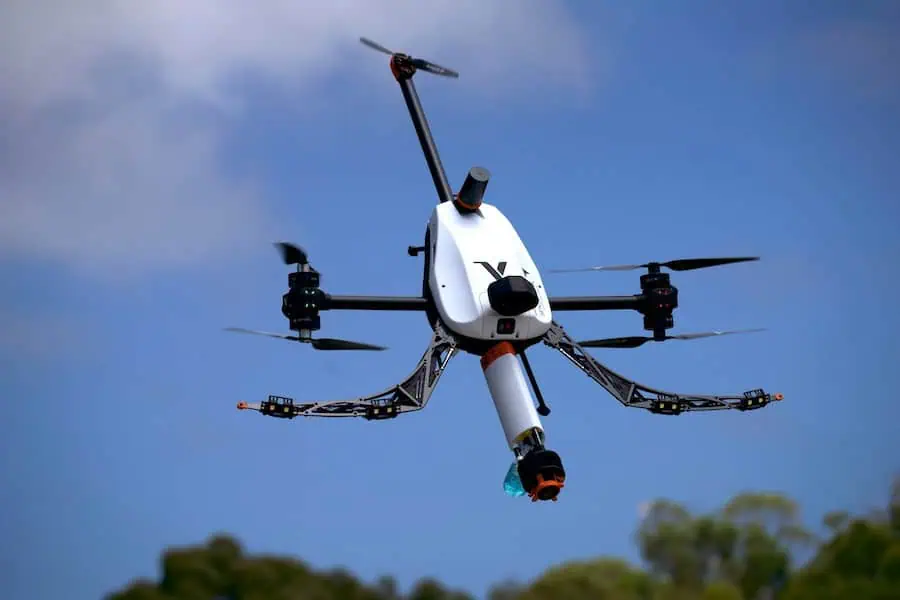
Voliro T
Advanced aerial robotic platform for non-destructive testing & contact inspection
Voliro T is a cutting-edge inspection platform with a unique tricopter design that features tiltable rotors and the ability to provide highly stable interaction with surfaces and objects at height and from any angle. It can apply up to 30 N of stable force and several Nm of torque, enabling true omnidirectional operation for virtually any use case.
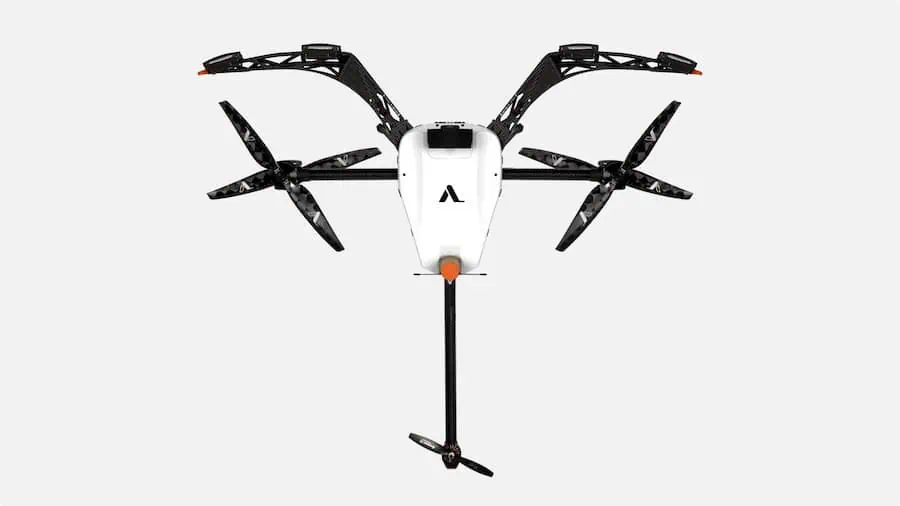
The Voliro T aerial inspection system utilizes a 4K inspection camera and 2K pilot camera to provide the utmost in real-time situational awareness with crystal-clear imagery. With RTK-capable GNSS, six LiDAR distance sensors, and redundant IMUs, barometers, and magnetometers, it can perform precision contact work with ease both outdoors and in indoor and GPS-denied environments.
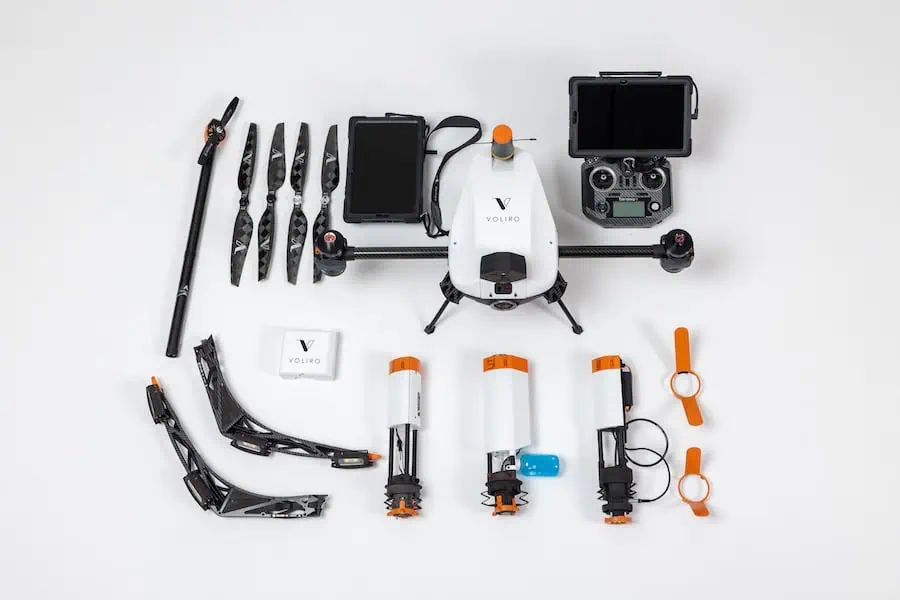
Voliro T cuts inspection expenses in half while boosting effectiveness by tenfold
- 90% Saved on CUI Inspection with Voliro T Drone-Based Pulsed Eddy Current Sensor
- Millions Saved to Refinery by Preventing Costly Reactive Maintenance
- Grupo DR1 Uses Voliro T to Cut Chimney Inspection Time by 40% for Brazil’s Largest Paper Exporter
- Wind Turbine Maintenance Efficiency: How AssetTech Uses Voliro T to Cut Costs by 50% and Boost Inspection Speed 16x
- $1.2M Saved by Large Mining Producer Using Voliro T Drone for Ore Bin Inspection
- Bilfinger Cuts Inspection Costs by 30% on Three Columns and Piping at a Chemical Plant
Versatile inspection payload capabilities
The Voliro T can be equipped with a range of plug-and-play payloads that make it an indispensable asset for all kinds of inspection work.

Options include:
 Electromagnetic Acoustic Transducer (EMAT)
for wall thickness measurements
Ideal for corroded and dirty surfaces with a maximal lift-off of 4 mm. Compliant with ASTM E1816 – 18. Range 2-150 mm, resolution 0.06 mm.
 Ultrasonic Transducer (UT)
for wall thickness measurements
Compliant with EN 12668-1 and ISO 16831:2012 Echo-to-Echo and Pulsed Echo test mode with live A-Scan. Thickness Range 2-150 mm, resolution 0.06 mm.
 High Temperature Ultrasonic Transducer (UT)
for wall thickness measurements
Compliant with EN 12668-1 and ISO 16831:2012 Echo-to-Echo and Pulsed Echo test mode with live A-Scan. Operating temperature 0 – 260 °C / 32 – 500 °F.
 Dry Film Thickness (DFT) Gauge
for coating thickness measurements
DFT or coating thickness is the most important measurement for the inspection of protective coatings. Magnetic induction and eddy current measurement mode with a range of 0 to 1.5 mm (F) / 0.7 mm (N).
 Pulse Eddy Current (PEC) Gauge
for measuring relative volumetric material loss beneath insulation
Relative pulsed eddy current wall thickness measurement. Designed for Aluminum jackets and low carbon steel assets. Maximum lift-off distance of 100 mm. Wall thickness range (low carbon steel): 3 – 20 mm.
 Wind Turbine LPS Tester
for full circuit resistance measurements
The needle probe establishes an electrical connection with the lightning receptors even if they are oxidated. The angular compliant probe is applied with a constant force of 30 N.
Industries
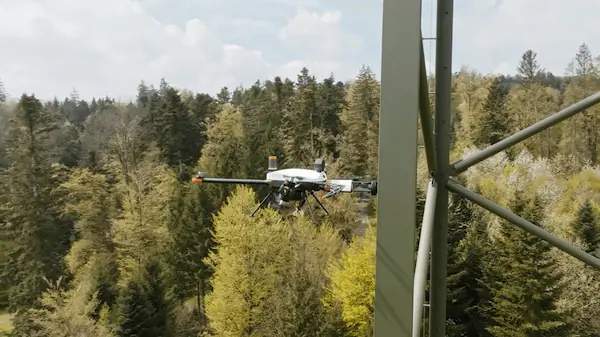
Infrastructure
The Voliro T is highly suited to carrying out essential maintenance of critical infrastructure such as pylons, bridges and water towers, ensuring continued effective operations and safety for the public and the environment.
Click here to read a case study showing how measurement of the coating thickness of over ten transmission towers per day can be undertaken by a single operator.
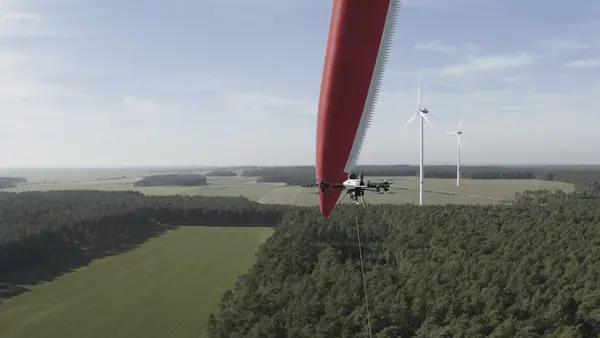
Wind
The Voliro T can be equipped with a lightning protection system tester and thickness measurement sensors that are ideal for both onshore and offshore wind turbine inspections.
Click here to read a case study showing how up to 18 wind turbines per day can be inspected for defects.
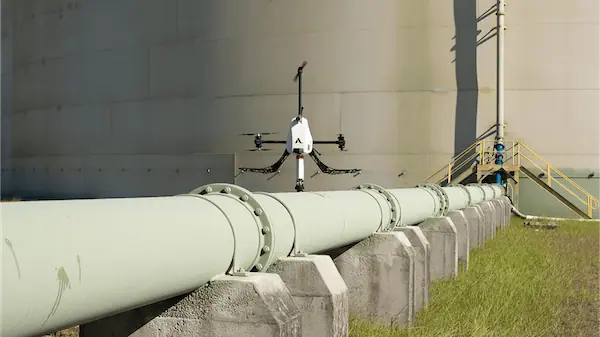
Power
Easily inspect a wide range of assets in renewable and non-renewable facilities with Voliro T, including thermal, nuclear, and solar, to catch defects such as corrosion and prevent major issues and downtime.
Click here to read a case study showing how measurement of the coating thickness of over ten transmission towers per day can be undertaken by a single operator.
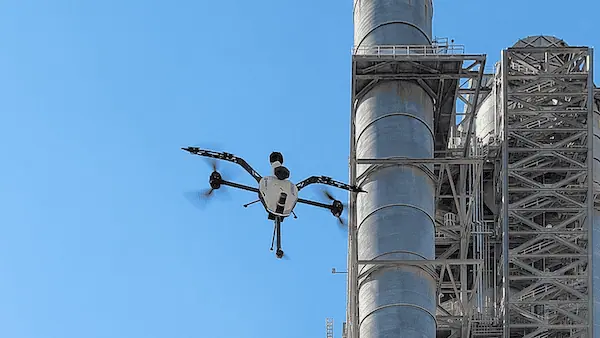
Oil & Gas
Voliro T is ideal for both onshore and offshore inspections of oil and gas infrastructure, including flare stacks and chimneys, storage tanks, and pipelines.
Click here to read a case study showing how 24 days of work and $165,000 dollars were saved during a 400-foot stack inspection.
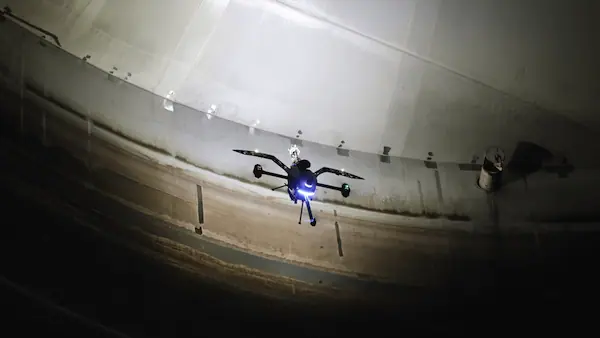
Chemicals
Drone inspections are vital within the chemical industry for ensuring asset longevity, reducing energy costs, and optimizing maintenance programs.
Click here to read a case study detailing how large chemical storage tanks can be thoroughly inspected in as little as 75 minutes.
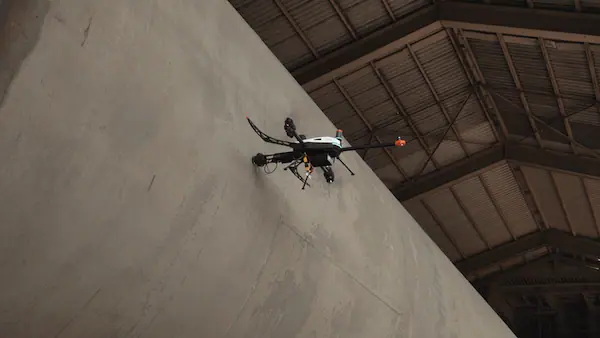
Cement & Aggregate
Voliro drones can be used to significantly optimize inspections within the cement manufacturing industry, including assets such as kilns, raw material storage facilities, preheaters and silos.
Click here to read a case study detailing how cement kiln wall thicknesses were measured up to four times faster with three times the number of inspection points, without the need for cherry pickers.


Reviews
There are no reviews yet.