
Ukraine may not place additional orders for drones from Europe’s most valuable defense tech startup after the company’s weapon systems faced problems during frontline tests.
Helsing, a powerful Munich-founded company with close ties to Germany’s armed forces, is backed by a Swedish billionaire and several U.S. venture capital firms.
The startup signed a deal in 2024 to provide Ukraine with 4,000 strike drones produced together with a Ukrainian company and delivered around half of those models, known as the HF-1.
But, according to a November 2025 presentation prepared by Germany’s Defense Ministry seen by Bloomberg, some 40% of the shipments remained in Ukraine’s inventory.
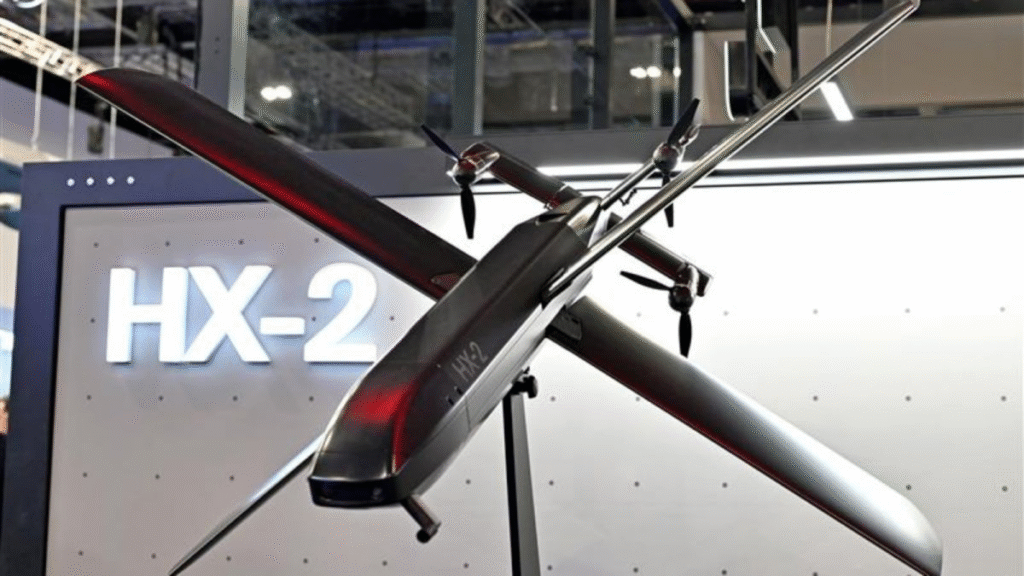
The HF-1 had faced criticism in Ukraine for being too expensive and ineffective, and the parties were converting the contract to supply Helsing’s flagship HX-2, a so-called X-wing drone that combines fixed wings with a quadrocopter’s propellers, instead of the other model.
But the presentation also reported problems with the HX-2, stating that just 25% of the drones were able to launch in frontline tests by Ukraine’s 14th Regiment.
Both Helsing models intended for Ukraine were supposed to include three AI components: terminal guidance, midcourse guidance and visual target acquisition. But they lacked all the AI components necessary for these features, according to the presentation.
The setbacks have undermined demand for the drones, while Germany doesn’t plan a follow-up order until an expression of interest from Ukraine, Bloomberg reported, suggesting Kyiv will not place any additional orders.
‘Confident’ in their product
Bloomberg said its reporting was based both on the presentation and conversations with five people in Germany and Ukraine familiar with Helsing drones’ performance.
But Helsing said in a statement that it was unaware of the presentation and rejected many of the findings that Bloomberg presented it with, including that HX-2 drones had a high failure rate when taking off.
“We are confident that HX-2’s test performance will translate well into high hit rates on the battlefield,” Helsing said, “including under electronic warfare conditions.”
The company also said that their supply contract with Ukraine’s armed forces had set out from the beginning that Helsing would initially provide HF-1s and then switch to the more advanced HX-2.
They added that several groups in the Ukrainian military had expressed interest in the HX-2, which they said had been cleared for deployment on the front.
A spokeswoman for Germany’s Defense Ministry said its management hadn’t reviewed or approved the presentation, while Ukraine said it doesn’t comment on classified information.
Rise of AI-fueled warfare
When Helsing was formed in 2021 to integrate AI into Europe’s military systems, which lagged far behind cutting-edge developments in the U.S. and China, most venture capital wouldn’t invest in the bloc’s defense industry.
But the war in Ukraine changed investor attitudes as the continent moved to spend record sums to rearm and develop new military technology.
Helsing also pivoted to build AI-native hardware, equipment where AI is not just an add-on, while drones have become the most essential weapon used by Ukraine during the war and are in high demand.
Initially backed by Spotify founder Daniel Ek’s fund Prima Materia, Helsing was valued at around €12 billion by American funds including General Catalyst, Lightspeed Ventures and Accel in June.
“In the next few years, Europe is going to lead even over the U.S. in terms of the deployment of real AI-enabled autonomous systems,” Torsten Reil, co-chief executive officer of Helsing, said at the Bloomberg Tech Summit in London in October.
Intense competition
Nevertheless, the competition for government orders of unmanned systems is intense, with startups like Helsing facing off against giants like Rheinmetall AG.
While performance concerns and scrutiny over pricing are not uncommon in early-stage defense tech firms, they do leave the market open for competitors.
Poland announced in May 2025 that it had finalized a framework agreement to procure 10,000 kamikaze drones for Ukraine’s military by 2035.
The so-called Warmate 3.0, designed for precision strikes and reconnaissance missions, is to be produced by the Polish company WB Electronics, a part of WB Group, one of Europe’s largest private defense contractors.
WB Electronics is also working on the next generation of systems, including the Warmate 50, which is expected to have a significantly larger warhead and range. If developed, it could serve as a long-range weapon system for the Polish military, with the potential to strike distant targets such as Moscow.
In a post on X, Poland’s Defense Minister Władysław Kosiniak-Kamysz said: “This is another important step in building the combat capabilities of the Polish Army and drone troops.
“We are drawing conclusions from the war in Ukraine. Drones are the basis for building deterrence and defense capabilities.
“Poland is not lagging behind. It is one of the leaders.”

