
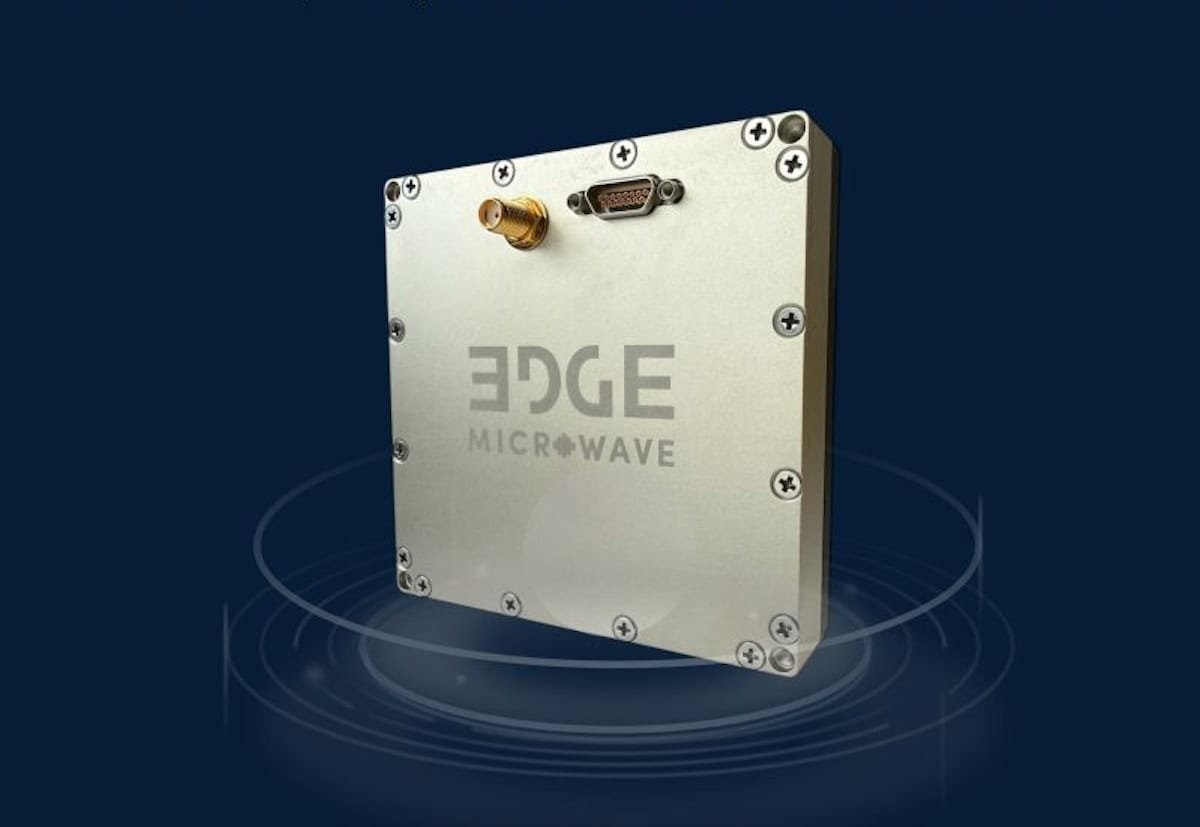
EDGE Microwave is an expert developer of CRPA (Controlled Reception Pattern Antenna)-based anti-jamming and interference mitigation solutions for GNSS receivers. Designed to ensure ultra-reliable navigation performance for drones, autonomous systems and robotic vehicles, the company’s products provide robust protection in the most challenging of environments.
Resilient anti-jamming for UxV GNSS signals
The GNSS signals utilized for UAV and unmanned systems navigation, positioning and autonomous operations are highly susceptible to radio-frequency interference, both from unintentional sources as well as intentional attacks.
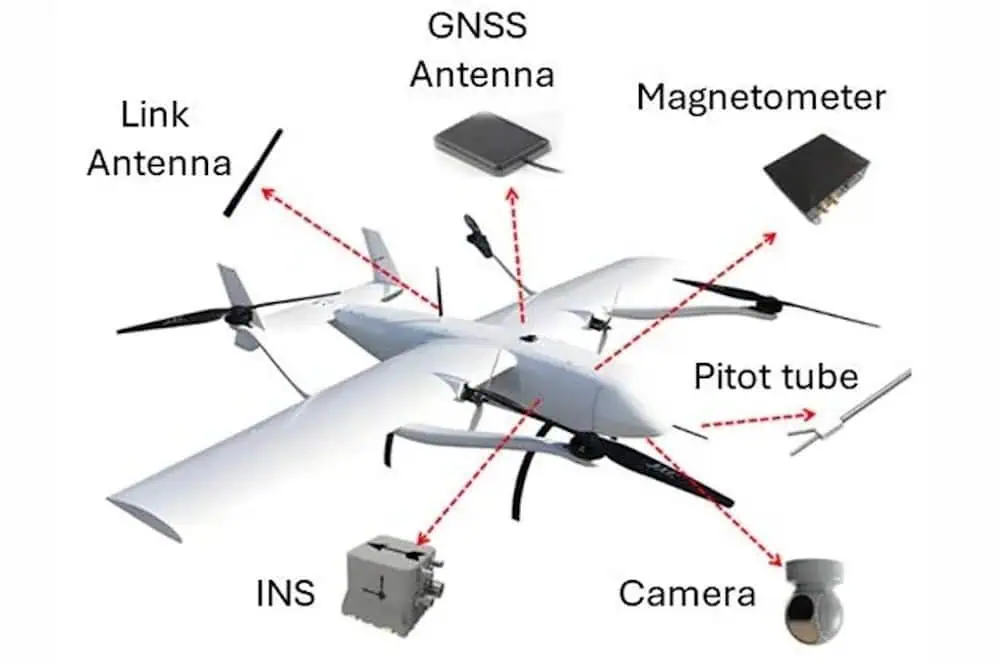
Small drones utilized for many commercial and industrial applications may crash or become highly unstable if their autopilots cannot compensate for sudden signal loss. The continued widespread use of RF devices and the expanding availability of low-cost jamming devices have caused these issues to become even more of a concern as time goes on.
Whitepaper: GNSS Interference & Mitigation
Read EDGE Microwave’s whitepaper on GNSS Interference and Mitigation Strategies
CRPA Solutions
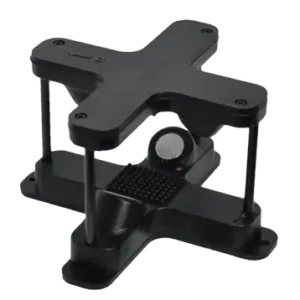
EDGE Microwave’s CRPA solutions utilize multiple antenna elements to shape the GNSS signal reception pattern and suppress interference, directing nulls towards jamming devices and beams towards legitimate satellite signals. The low-SWaP and highly cost-effective systems are easy to retrofit into a wide range of drone and unmanned systems platforms, providing robust protection and ensuring safety and mission success.
 |
 |
 |
 |
|
| Dimensions | 90 x 90 x 22 mm | 130 x 130 x 28 mm | 130 x 130 x 28 mm | Ø200 x 38 mm |
| Weight | 275 g | < 540 g | < 670 g | < 1300 g |
| Power Consumption | < 13 W | < 13 W | < 25 W | < 25 W |
| Operating Voltage | 9–36 VDC | 9–36 V DC | 9–36 V DC | 9–36 V DC |
| Frequency Bands | GPS L1 GALILEO E1 BEIDOU B1 |
L1C, L1C/A, E1, B1C L5, E5a, B2a |
L1C, L1C/A, E1, B1C, B1I L2C, L2P(Y) L5, E5a, B2a |
L1C, L1C/A, E1, B1C, B1I L2C, L2P(Y), E5b, B2b, B2I L5, E5a, B2a |
| Jammer Suppression | > 50 dB | > 40 dB | > 50 dB | > 50 dB |
| J/S Performance | > 110 dB (with GNSS receiver) | > 100 dB | > 110 dB | > 115 dB |
To find out more about Edge Microwave’s next-generation anti-jamming and interference mitigation solutions for UxV GNSS signals, get in touch today.
More from Edge Microwave
An Overview of Global Navigation Satellite Systems (GNSS)
Edge Microwave examines global navigation satellite constellations and the signal modulation techniques used to ensure their accuracy. It further explores the critical vulnerabilities of GNSS to interference and the advanced hardware strategies required for signal protection.
A Primer on GNSS Signal Modulations
A technical overview of the modulation techniques used in modern satellite navigation, ranging from foundational BPSK-DSSS to advanced AltBOC waveforms. It explains how these sophisticated signal structures are engineered to enhance positioning accuracy, multipath resistance, and resilience against radio-frequency interference.
Improved Frequency Tracking with Adaptive Moments for Narrowband Interference Mitigation in GNSS
This whitepaper details an enhanced frequency tracking method for GNSS receivers that utilizes adaptive moments to mitigate the effects of narrowband interference. It explores how these adaptive algorithms dynamically adjust to signal disruptions, ensuring robust carrier tracking and maintaining positioning accuracy in challenged RF environments.
Real-time Pre-Correlation GNSS Interference Classification with Lightweight Learned Algorithms
In this whitepaper, Edge Microwave categorizes various types of GNSS interference, distinguishing between unintentional noise and malicious threats like jamming and spoofing. It outlines the specific spectral characteristics of these disruptions and discusses the detection methods necessary to maintain signal integrity.
Reviews
There are no reviews yet.